
The European Union through the Eyes of Fourth Graders? Fun and Playful!

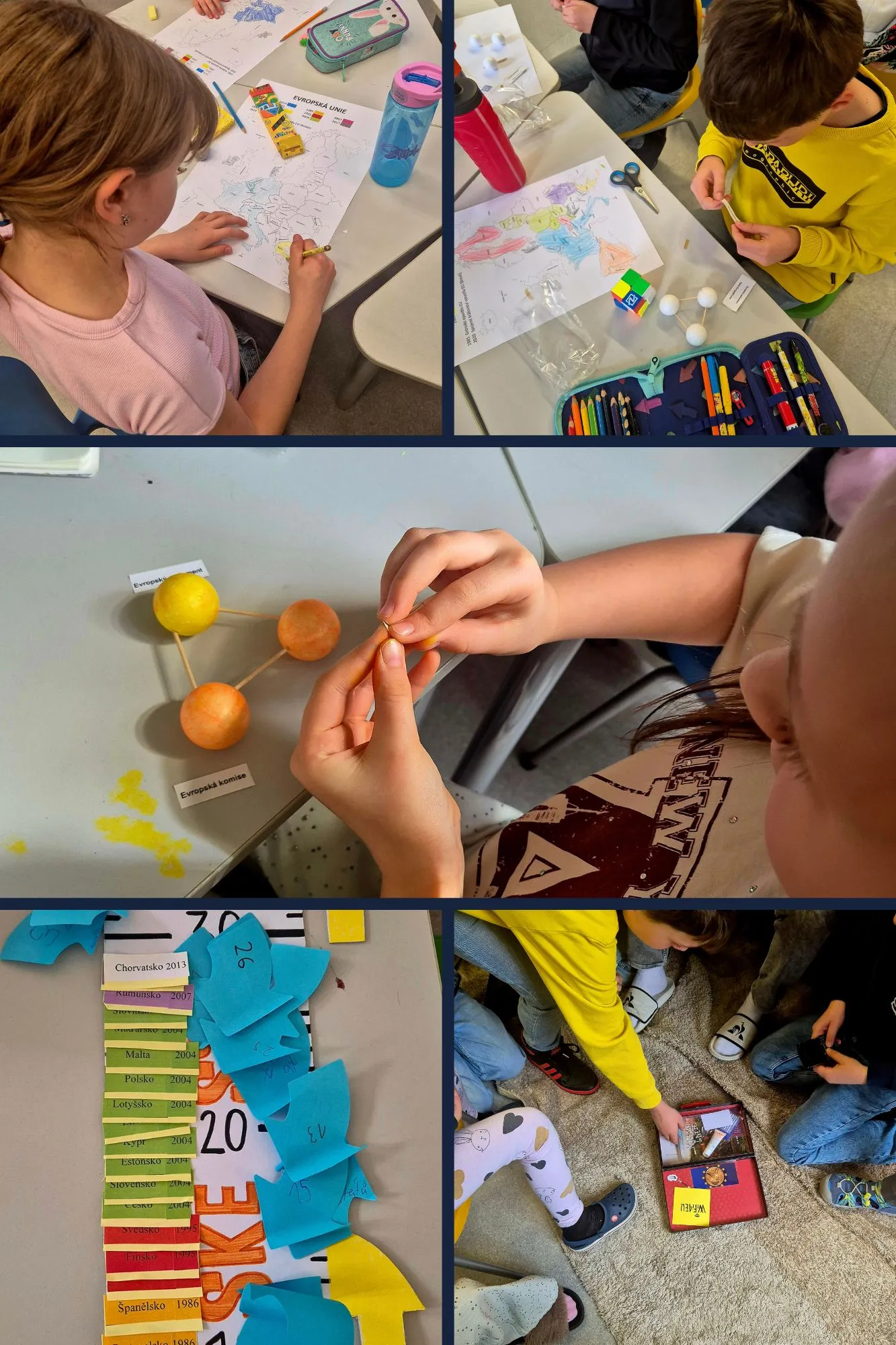
At the beginning, they jointly explored what the European Union actually is, how it was formed, and how it functions. The children guessed how many member states it has — their estimates ranged from 13 to 39. They discovered the real number while coloring a map showing the EU's expansion. They learned about what the EU brings and supports through a "traveler’s suitcase" full of surprises. The children experienced the symbols of the EU with all their senses — they listened to the anthem, read its lyrics, touched the EU flag, and connected Europe Day with Robert Schuman. Each child created a simple model of the so-called institutional triangle. Using a concrete example — a petition to bring back plastic straws in Capri-Sun — they understood how a citizen’s initiative can work within the EU legislative process. The morning session ended with a team quiz on the EU, where the fourth graders answered with such confidence that even ninth graders would have been impressed.
Other articles
Chemistry Brings People Together: KŠB at the 2026 Evening of Czech Chemistry

Czech chemistry and the chemical industry are built on innovation, responsibility and the people who drive the field forward. On Thursday, 22 October 2026, leading figures from the field and industry representatives came together at the Grand Hotel International Prague for the Czech Chemical Industry Association’s annual Evening of Czech Chemistry.
KŠB advises Smart Energies Group on transaction supporting wind power development
KŠB has advised Smart Energies Group (SEG) on a transaction with NOHO and innogy Česká republika. The transaction is intended to support the development of wind power in the Pardubice Region and is built on the synergy between wind power generation and battery energy storage.
Pavel Dejl named Czech Republic Lawyer of the Year at the Legal 500 Central & Eastern Europe Awards 2026
We are delighted to announce that KŠB partner Pavel Dejl has been named Czech Republic Lawyer of the Year at the prestigious Legal 500 Central & Eastern Europe Awards 2026.


